The Harpoon Misses The Mark

•August 6, 2010 • Leave a Comment

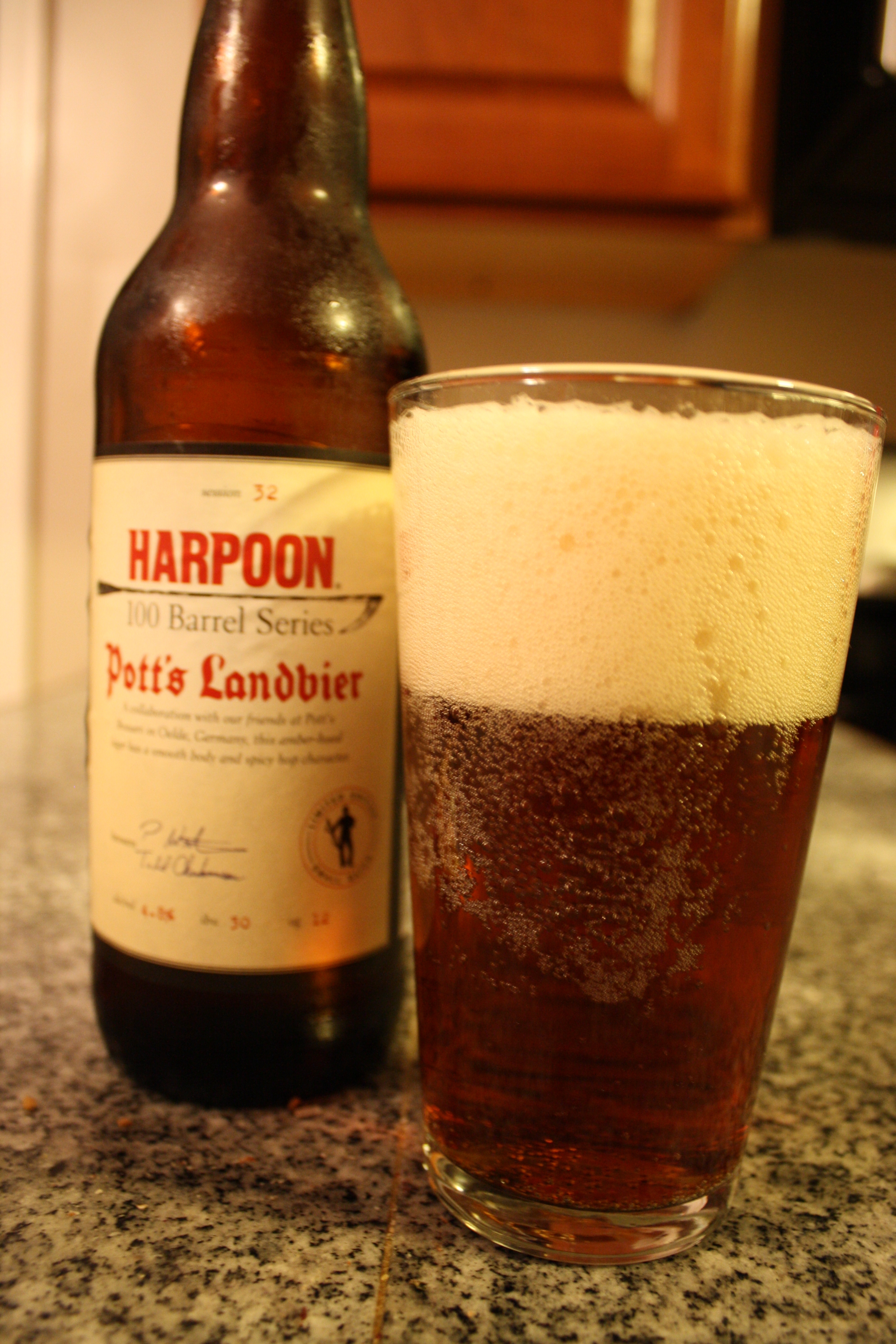
So, my man Harry at the Liquor Pump had a new recommendation for me this week: Harpoon 100 Barrel Series – Session 32 Potts Landbier.  He admitted that he hadn’t tried it yet, but he had high hopes and I did as well.

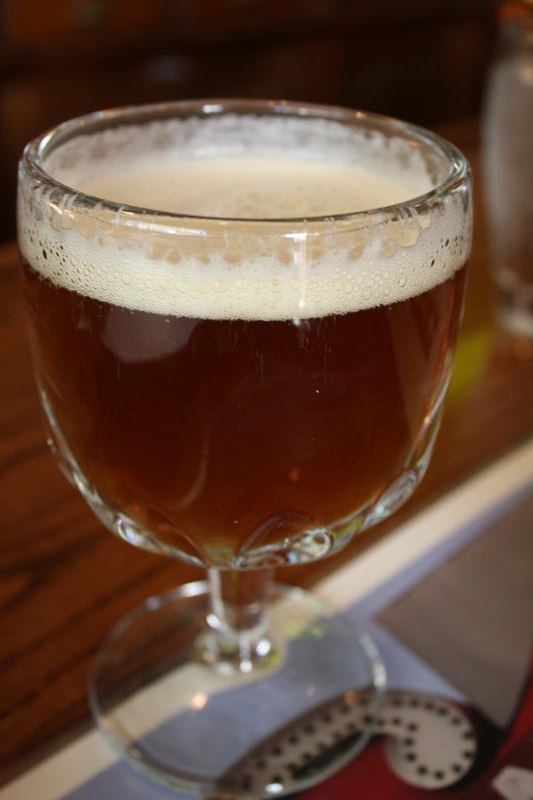
Harpoon’s Potts Landbier is collaborative effort with Braueri in Oelde, Germany.  With high expectations I open and pour my beer.  My hopes fall as flat as the Midwest prairie.  The beer pours thin into the glass and the head dissipates quickly leaving minimal lacing, which also vanishes in short order.  The nose is very faint.  Whatever scent exists leaves a faint sour note.  It’s very similar to that not too pungent smell of a San Francisco bakery finishing its first round of sourdough bread that wafts to you on the sidewalk as you pass along the store front.  There are similarly light malt notes, but they are so ephemeral they are almost not worth noting.  The one highlight was the excellent clarity and I believe clarity in general is overrated.  There are a number cloudy beers or beers with sediment that are outstanding.

It had a low 4.8% ABV (OG 12) and complexity is rare – if not impossible – at that level.  Now, a low ABV doesn’t necessarily mean little hops or flavor, but unfortunately that is what Harpoon delivers here.  The beer is very thin in the mouth even by session beer standards.  The taste is very one note and flat with perhaps a touch of caramel.  There are negligible hops noticed in this beer, however the finish gets an A for the attempt but a D- in execution.  There is a very quick and slightly peppery bite that is so fleeting I wonder if it ever really happened.  It looks more carbonated than it is in actuality.  There are fine small bubbles that dance along the tongue, but sadly, that is the most action your taste buds will experience with this beer.

In retrospect, perhaps I should have been a little more judicious with my anticipation.  Landbier translates to ‘country beer’.  Landbiers are designed to be session beers, which this clearly intended to be.  I’m just not sure what Harpoon was trying to accomplish with this beer.  I get it.  Landbiers are not complex, but instead smooth beers that are easy to drink.  I also appreciate subtle, but this beer strikes me as more lazy than subtle.  Even at this relatively low price point for a bomber there are a number of beers that I could acquire around the same price that I would choose well before reaching for another Pott’s Landbier.  Hopefully, next week yields something a little tastier.

Saúde!

Second Time Around

•August 3, 2010 • 1 Comment

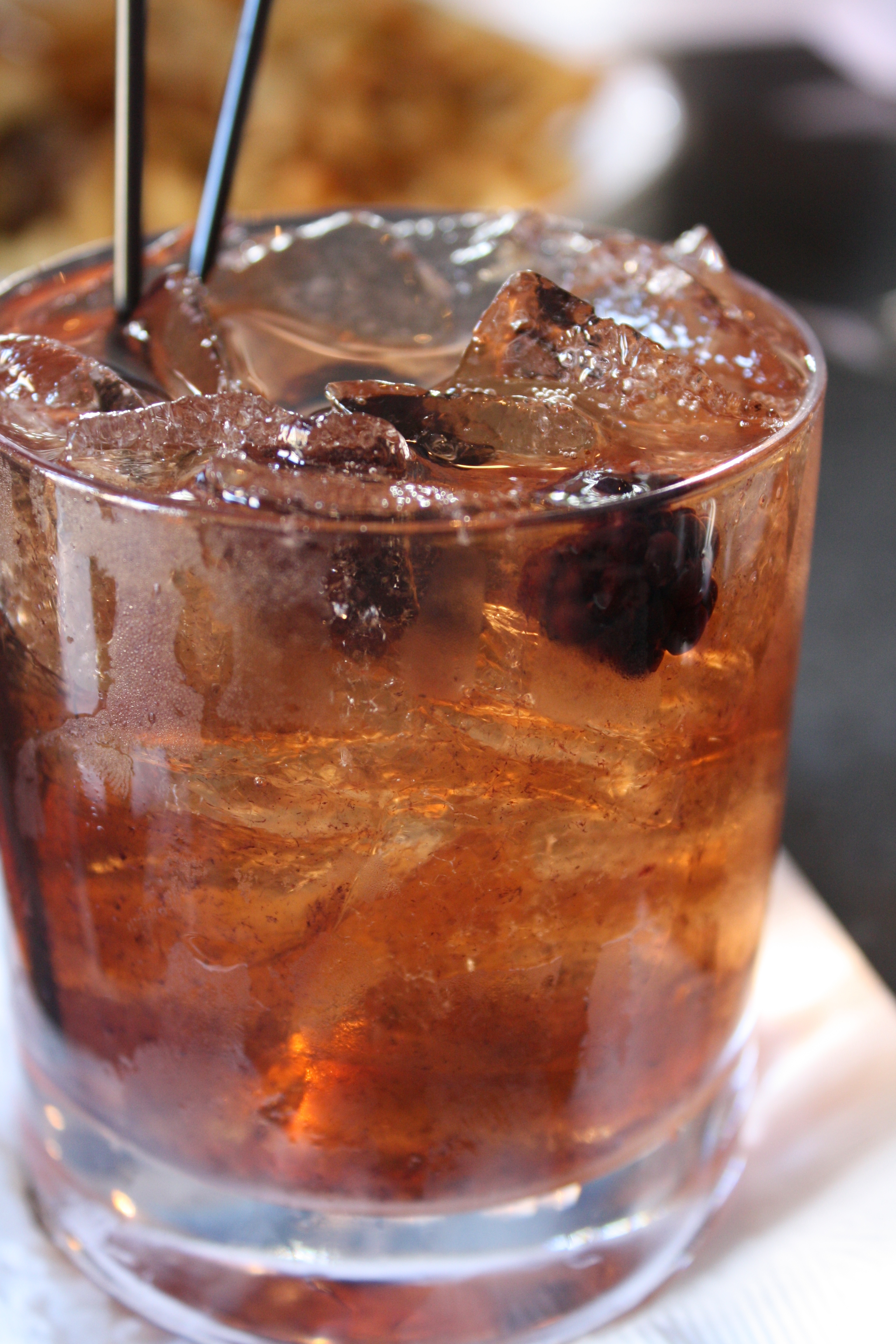
I’ll try anything twice.  It’s always been a useful and practical way to live my life.  I took this approach with Blue Hill Tavern located in Brewers Hill in Baltimore.  I was excited to head there as it has been on Baltimore Magazine’s Top 50 list for some time.  The first time Red and I went was in May.  I started out the evening with a New Old Fashioned ($8).  It was a playful twist on the original.  Blue Hill Tavern’s take contains vanilla infused bourbon, which is infused on the premises.  The wall behind the bar is filled with a beautiful assortment of spirits that have been infused onsite.  Rounding off the bourbon is simple syrup, water, a peach slice, and blackberries.  Despite the fruit color overtones of the cocktail, this was an unapologetically bourbon drink.  The bourbon was the star and every other component was a member of the supporting cast.  It was a sweet drink as one would imagine, but the sweetness wasn’t overdone.  The flavors were very, very clean and bright.  Fruit can be a dangerous component in cocktails.  They can easily overwhelm a delicate drink or conversely be lost by potent spirits.  This particular cocktail rode that prickly fence.  The blackberries were a very nice and unusual pairing with the bourbon that I appreciated and I have since imitated at home.

Unfortunately, last week my second go around with this cocktail did not fare as well.  This time I felt like I received a bourbon on the rocks.  The distinct coloring from the fruit was nearly non-existent.  The blackberries were still there, but the peach slice was noticeably absent.

The cocktail was hot from the moment it hit my mouth until it slammed into my stomach.  The bourbon was overwhelming.  This was not the refreshing libation I consumed in May.  I asked our bar-chef which bourbon was serving as the base for the vanilla infused bourbon.  He inquired and returned with his answer: Makers Mark.  What a dreadful mistake.  In May the base of the bourbon had been Woodford Reserve.  These two bourbons are worlds apart in complexity and silkiness.  The change is a fatal flaw for this drink.  A cocktail that had been delivered with grace and style was now a garish and ugly caricature of itself.  Mediocre ingredients make for an inferior product.  The change is truly regrettable and I hope that it is not permanent change for what was a great cocktail.

Fortunately, that was the only blemish on what were two otherwise wonderful experiences.

The Blueberry Sweet Tea cocktail ($7.50) – blueberry infused vodka (also infused onsite), sweet tea vodka, simple syrup, iced tea – was a well made cocktail.  The tea and the blueberry were in excellent proportion with each other.  The simple syrup helped draw some additional sweetness out of the blueberry to combat the bitterness of the tea.  It was a little sweet for my palate, but this is a sweet tea cocktail; so, that is very much the point.  It inspired us to make our own version for Red’s birthday, which was considered a smashing success by our guests

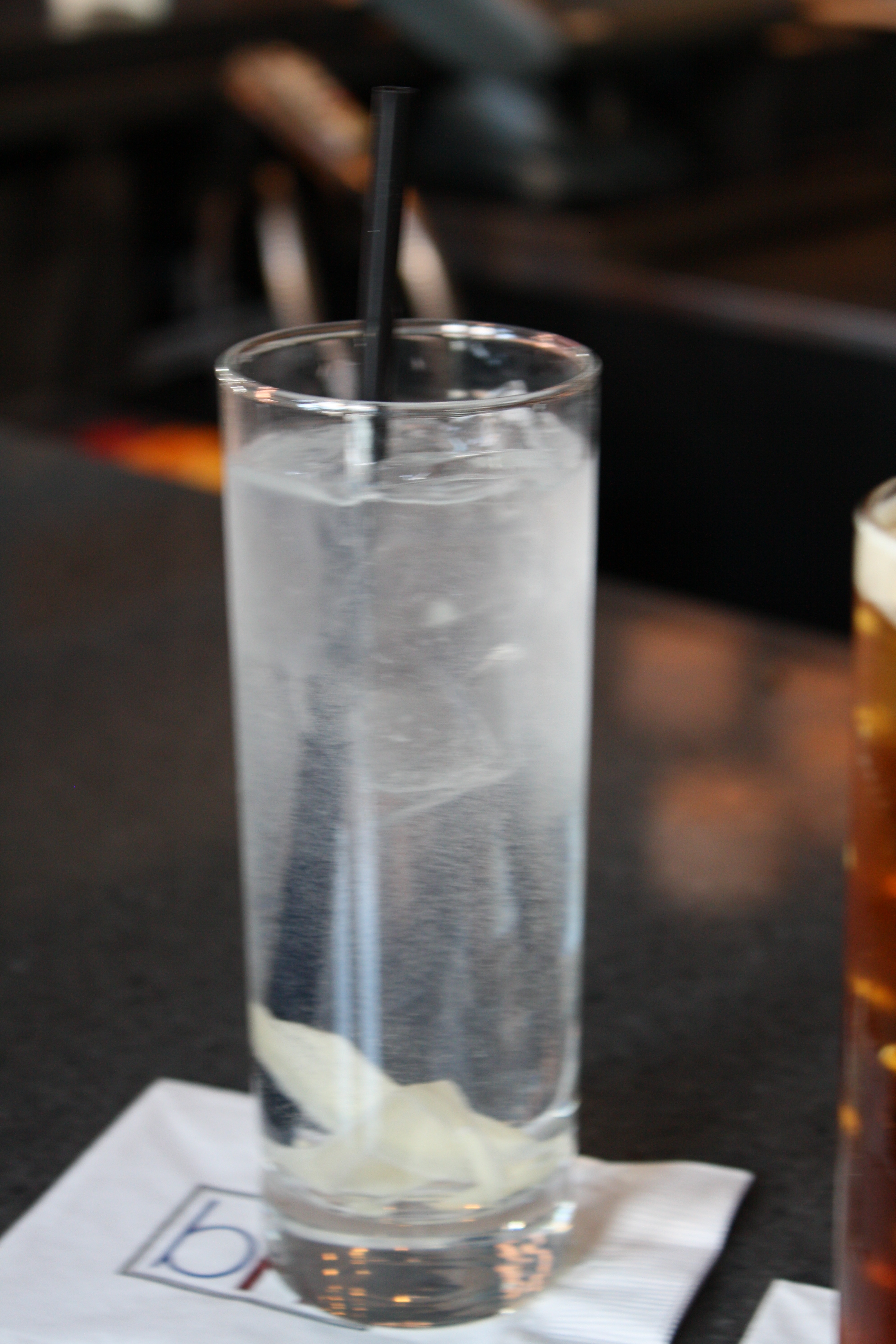
When drinking and creating a gin and tonic, I find myself siding with my British counterparts that the proper ratio for a gin and tonic is 1:1 – with a wink to the ratio as it is almost always constructed with a tad bit more gin than tonic.  Americans on the other hand tend to err on the side of the tonic with 1:2 ratios or even the ghastly 1:3 ratio.  Blue Hill’s Gin and Tonic ($8.5) is of the American variety.  However, their quinine infused carbonated water is the artisanal Q Tonic, which is a delightful tonic and is almost weightless in the drink.  The gin is also infused onsite with ginger and is garnished with pickled ginger.  The ginger is slight on the nose as well as on the palate, which works well in the summer.

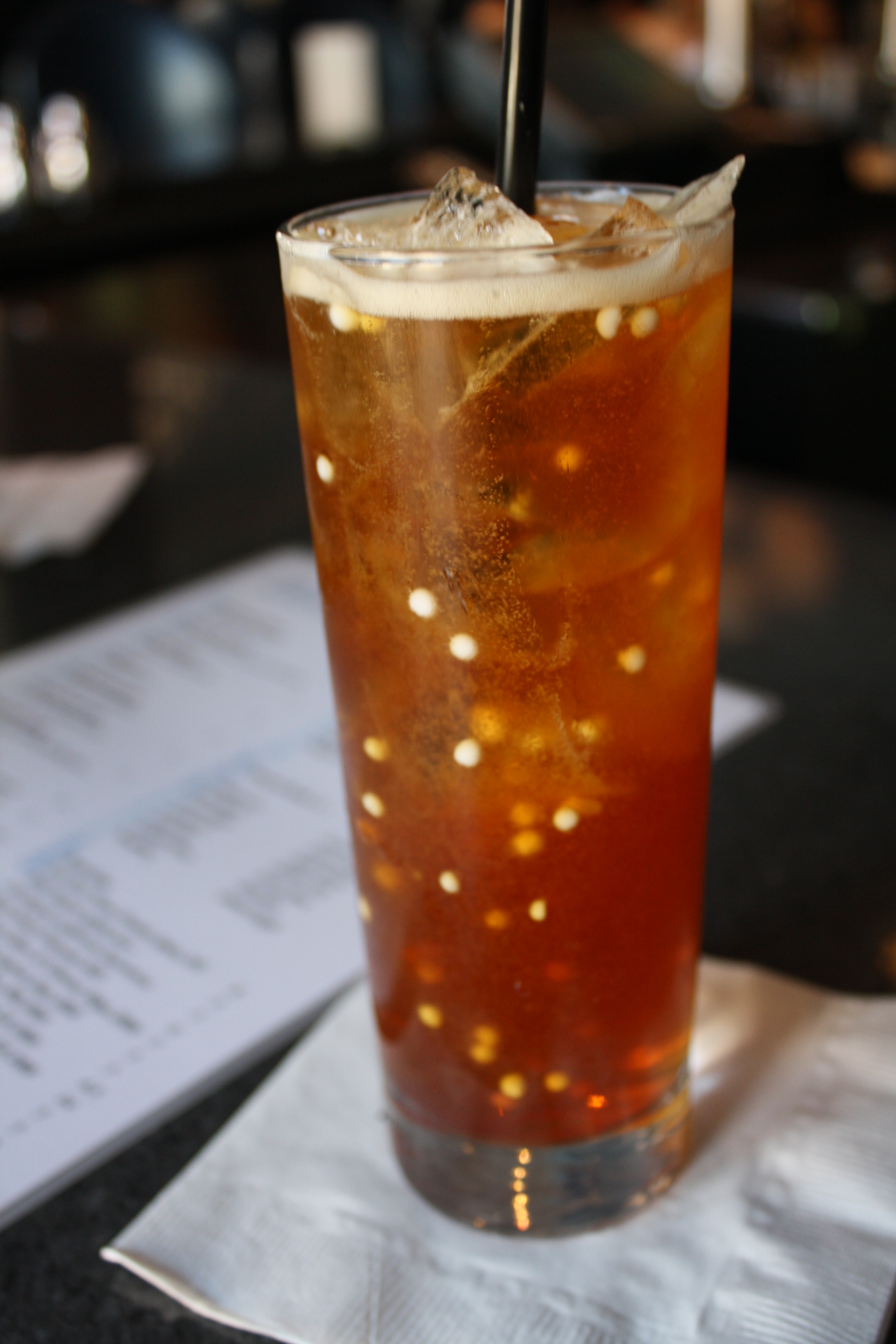
The addition of a new cocktail since our last visit was the highlight of my dipsomaniacal adventures at Blue Hill Tavern.  The Dark and Stormy with Hail is a fantastically clever drink.  An often underwhelming art is the skill of crafting a visually exciting cocktail while maintaining clarity and execution in the taste of the drink.  This is certainly not the problem here.  Even the Russian judges are forced to score this drink a 9.5.  It is a traditional Dark and Stormy made with Goslings rum and Barrit’s ginger beer, but there are tiny coconut spheres floating in the drink.

The addition of the coconut is an absolutely brilliant concept that brings fun and texture to the drink.  I find it conceptually to be a mature version of the unique and playful youthfulness of bubble tea.

Despite my grave disappointment with my New Old Fashioned, Blue Hill Tavern still ranks highly for my happy hour escapades.  Their specials include $3 bottles, $4 draught beer, $5specialty cocktails and glasses of wine and their appetizers are half-price.  The food is also commendable, especially the after dinner specialties.  As the lady of Kitchen Treats remarked, “Whoever is infusing the liquors and making the deserts…they are the real stars”.  So, try Blue Hill just make sure you do it twice.

Saúde!

A Man On The Inside

•July 28, 2010 • 2 Comments

Everyone has their trusted advisor.  For the Catholic, it’s their priest. For the Don, it’s his consigliere.  For me, it’s my Beer Guy. (While women are many times the superior in their ability to discern flavors [most supertasters are women], for the sake of this blog, I’ll be using the male pronoun – we can argue about this at a later date.).

What makes a good beer guy? Well, he has to know his stuff and he has to have the inside track.  He has to be able to procure the finest when he needs it. Ideally he’s not only a beer guy, but he’s also an oenophile.  It may be overstated in this wonderful age of craft beers, but a great beer can easily compete in complexity with the best wines in the world. That’s why my beer guy has to be knowledgeable.  Knowing whether cascade or centennial hops were used for aroma is as important as knowing the difference between a 2005 and 1992 Bordeaux (’05 is fabulous ’92 is really quite dreadful).

I’ve had a beer/wine/liquor guy in every city I have lived.  In the Charm City, I go to my man Harry at the Liquor Pump to guide me to the new and exciting beers and wines that come his way. I spoke with Harry about my fledgling project (yes, the blog you are reading right now) and for (at least) the rest of the summer, I have put myself in Harry’s more than capable hands. Each week he is going to choose my beer of the week.

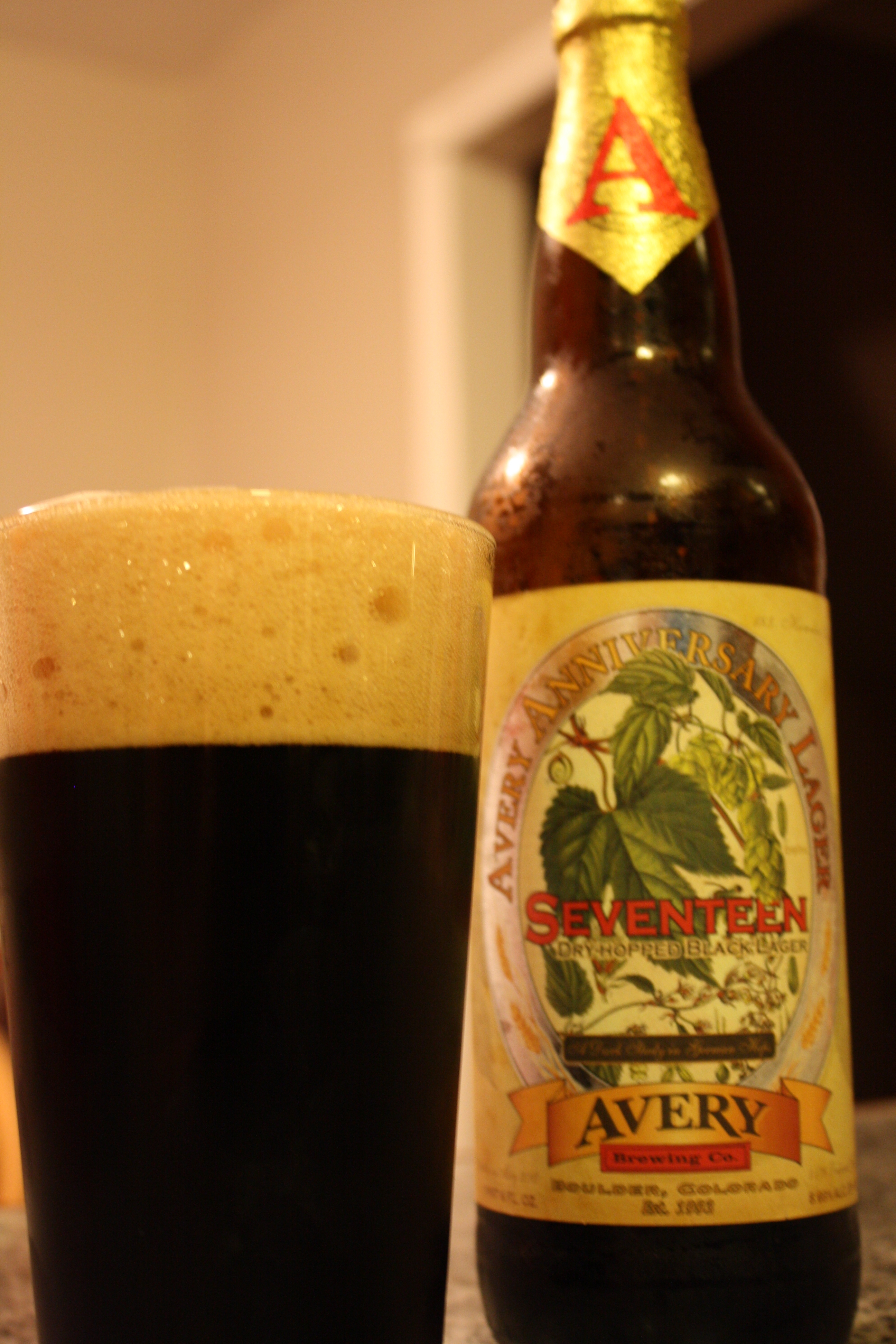
This week he selected an absolute winner: Avery Seventeenth Anniversary Black Lager by Avery Brewing Company out of Boulder, Colorado.

The pour is nothing like a traditional black lager. This lager pours as dark as a Caligula’s heart, but with a sandy tan head. It’s has the appearance, although not quite the consistency, of a stout. It also has the aroma of a stout. The nose is very malty with lots of dark chocolate. The first taste is also very much like a stout, but it is more thin across the tongue.  It has heavily roasted malts that are almost, but not quite burnt that compliment the aforementioned chocolate scents, but much they are much more sweet on the palate than on the nose. This lends itself to a bit of a caramel character. Fortunately, this beer is more heavily hopped than I expected. This beer teeters on the edge of cloy sweetness, but the generous amount of German hops give a strong sense of earth and pine that bring it back into balance. As I was writing my notes after my first taste, I noticed a touch of unsweetened vanilla that tickles the back of the tongue at the very end of this pleasantly long finish.

However, there was a flavor component in the middle of the tasting that I couldn’t quite place. This taste had hints of a dark red fruit. I was tempted to declare it to be an overly ripe Bing cherry, but that wasn’t right. That was the chocolate component’s influence on me. Like a struggling politician I was flip-flopping constantly. I finally surrendered to my better half (who, while not quite a supertaster has a palate that I have yet to see matched). She tasted.  She waited.  She held up her finger; looked at me and smiled. She went to the refrigerator and grabbed a box of fresh strawberries. I was flummoxed. That couldn’t be right. I needed another taste.

<Brief Interlude>

My wife is responsible for turning me into an unforgiving oenophile. Before I fell into her clutches, I couldn’t tell the difference between an Australian Shiraz and an Oregon Pinot Noir (this, if nothing else, shows the powerful and positive influence a good woman can have and more importantly it demonstrates that there is hope for all of us). One of my first lessons from her was to inhale through my nose while the wine is entering my mouth to enhance the flavor and better discern the flavors. This trick is incredibly useful for tastings in every possible scenario obviously including, but not limited to beer. I use this trick once again as she pulls out the box of strawberries.

<End Interlude>


As is expected, I bite into a strawberry and savor the sweet intense flavor. I wait just a moment and taste the Avery.  It’s wrong.  I look at Red with a raised eyebrow and shake my head.   She in turn gives me The Look. I realize my mistake.  It isn’t the taste of the strawberry that I can’t place; it’s the smell of the strawberry that is the unrecognized flavor component. That previously undefined red fruit note is best defined as tasting the way a perfect summer strawberry smells: slightly earthy, red, ripe, slightly sweet, and distinctive.

This libation is for a beer drinker. It has an alcoholic pinch in the mouth, but for anyone who drinks big beers this is not only expected, but enjoyed. I found the bite to be more subtle than I would expect for such a big beer (8.69% ABV).  I recommend this beer wholeheartedly.  While I didn’t try it, I absolutely believe that the Avery would hold up to a light to medium body cigar. A Costa Rican cigar or a light Dominican would be a nice accoutrement to this beverage (a cigar and beer pairing post is in the works).

So, with a tip of my glass to Harry, the Avery Anniversary, and his future choices, I bid you adieu and good drinking.

Saúde!

A Beer For Herb(s)

•July 14, 2010 • Leave a Comment

Now that graduate school has released it’s unrelenting grip for the summer, it is time to get back to what is truly important: drinking.

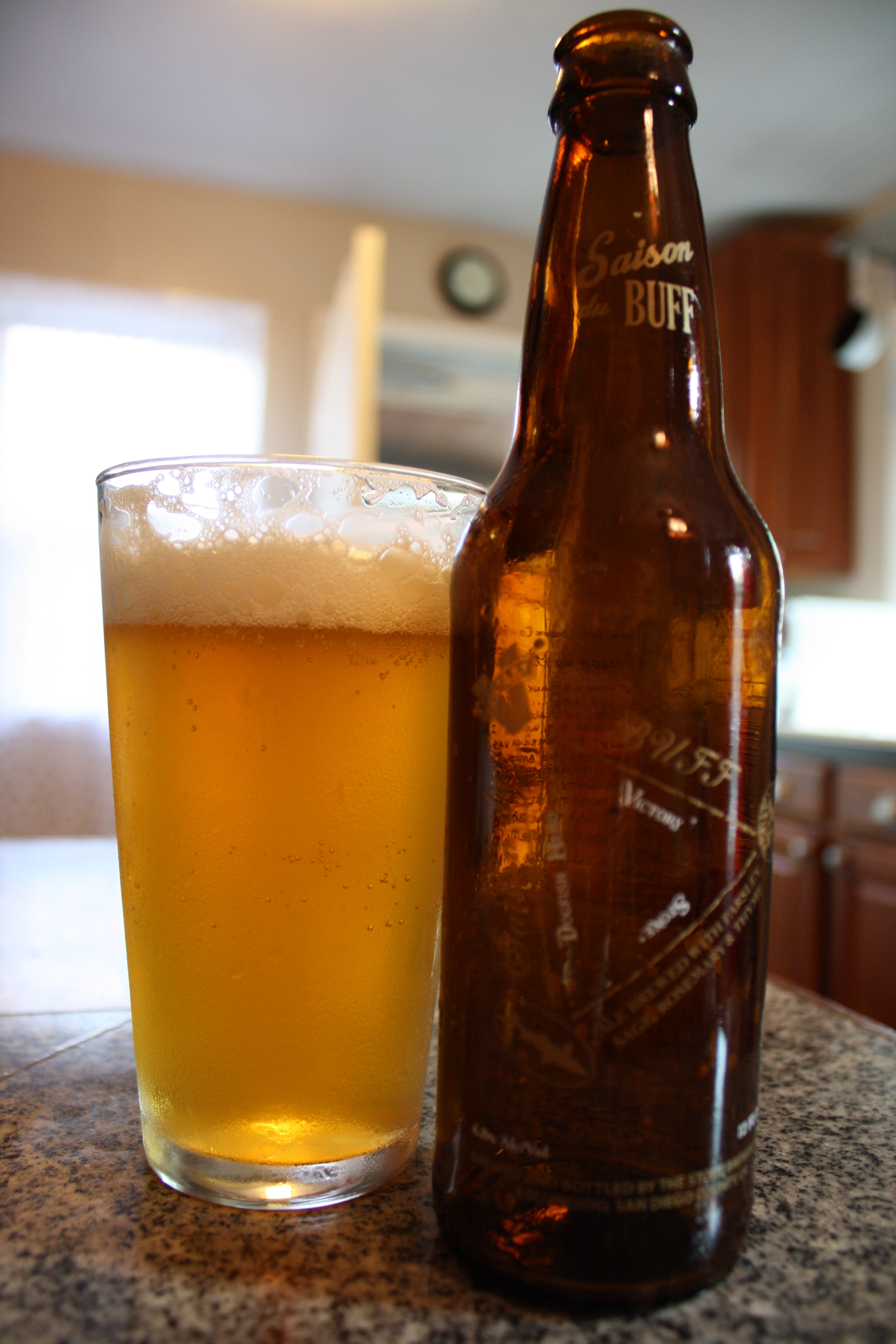
While I am suitably chagrined for believing that that Stone Brewery was in collaboration to release a Golden Imperial Stout (it was nothing more than an April Fools’ joke), my wounded pride has not stopped me from imbibing their latest collaborative effort, Saison du Buff.  Stone Brewing has teamed with the Dogfish Head and Victory breweries for their latest endeavor.

The heads of these respective breweries: Sam Calagione of Dogfish Head, Greg Koch of Stone, and Bill Covaleski of Victory have been in contact with each other for over 10 years.  In 2003 they formed BUFF (Brewers for Freedom of Flavor).  This is an alliance that is “committed to liberating collective taste buds, citing the dastardly and/or oppressive reign of so-called ‘fizzy yellow beer’.”  There is hardly a more worthy goal.

If you are familiar at all with these brewing companies (and you should be), you know that they create powerful, strong, flavorful, and eccentric beers (Dogfish’s tag-line is Off-centered stuff for off-centered people).  The latest incarnation is no different.

The description of Saison du Buff is an “ale brewed with parsley, sage, rosemary, and thyme”.  While the immortal Paul Simon and Art Garfunkel may have eluded to the pagan belief that these spices were a love charm in Scarborough Fair, this was not love at first sight for me.  This isn’t to say that it isn’t a an attractive beer it certainly is.  It pours a lovely golden color with a rich stark white head and wonderful lacing.

What gave me a distinct pause was the nose.  I immediately recognized the telltale sour note of a Belgian style beer.  I recoiled.  This was the best that these three fabulous brewers could concoct: another Abby/Belgian style beer in the market?  Bah.

As is my wont, I was wrong again.

Make no mistake, if you smell this beer you will wholeheartedly concur with me, but your palate will be completely taken aback as mine was.  The first taste is quite peppery.  This is the kind of pepper you would find in a full bodied syrah; it is that strong.  Much of this must come from the parsley that is part of the brewing process.  It’s very interesting because the bite from the pepper note blends into the bitter from the hops.  It’s a very cool concept.  This isn’t to say it’s overpowering in its bitterness and pepper bite.  Indeed, it is quite the opposite.  The bitterness is quite refreshing and is smooth and eminently drinkable.  You also get hints of the rosemary towards the end of the finish, but I was a bit disappointed that there was little to no trace of the thyme or sage.

Another item that surprised me was the alcoholic bite.  It doesn’t have a particularly high ABV (6.8%) and I love imperial IPAs and Stouts, but it just seemed out of character with the rest of the components of the beer.  I think the lighter nature of the ale doesn’t favor the stronger alcohol content.  However, it did pair exceptionally well with the quasi-fra diavolo sauce I made this evening.  It cut through the heat of the red peppers and in turn the sauce brightened up the beer quite a bit.  It brought out some citrus flavors primarily lemon and grapefruit.

Each of the breweries will be taking turns throughout the year brewing the Saison du Buff at their own establishment.  The beer I had this evening was brewed at Stone.  I am curious to try the beer again when the more local Victory (July 2010) and Dogfish Head (August 2010) breweries take a stab at it.  While these three men are collaborators, they are also men who are very proud of their craft.  I wouldn’t be shocked if each brewer makes just a little tweak when it is their turn to brew this beer if only in the spirit of making it a touch better.  I hope they prove me right.

Saúde!

I know Jack (and Jack Knows Beer)

•April 4, 2010 • 2 Comments

The lovely lady of Kitchen Treats and I decided to head into Charm City last weekend and explore an establishment that had been on our radar for some time: Jack’s Bistro.  Nestled on the corner of Elliot and South Robinson, Jack’s Bisto would be easy to miss if you weren’t looking for it.  If you haven’t sought out this gem it’s high time you did.  The menu, while limited, is eclectic and has some fabulous choices.  As I have a long term love affair with the enchanting city of Montreal, I was completely smitten with their take on poutine (that included an absolutely beautiful foie gras sauce).

I know, I know.  Food is nice, but let’s talk about what is important: the drinks.  The cocktail menu is a cute collection of some basic cocktails with fun twists (try the jalapeno margarita), but the cocktails were not my primary interest this evening.  Instead, I was focused on the beer and for good reason.  Jack’s Bistro boasts a beer list of over 65 outstanding brews including a small but impressive rotating draft menu and some very select bottled beers.

I started the evening with Brew Dog Brewery’s Dogma ($7.50).
Photo Courtesy of Kitchen Treats

If you haven’t heard of Brew Dog it’s high time you discovered their beer.  While I knew it wasn’t going to be the best pairing with my poutine, I had to have it.  Brew Dog teams up with one of my favorite breweries, Stone Brewing, now and again to come up with some absolutely off the wall collaborations like a golden imperial stoutDogma is an interesting brew.  It’s one of the few beers that contains caffeine.   The reason for this is during the brewing process guarana is added (along with poppy seeds and Kola nut).  This is a great beer and it’s all that much better because Jack’s Bistro serves it as a draught beer (I always find draught to be superior to bottled since the beer isn’t pasteurized, but that’s a conversation for another day).  The Dogma nose was very enticing.  It was nutty, very malty, and had a hint of green earth that seemed to balance it out.  This is a substantial beer (7.8% ABV) and it gave a full mouth feel, but not unpleasantly so.  Surprisingly, during the finish there was just a hint of lemon peel on the sides of my tongue and there was a fantastically long finish that was reminiscent of sunflower seeds with brown malt.  However, this Scottish ale should not be dismissed as a sweet malt beer.  The Bramling Cross and Amarillo hops would not be denied.  they were particularly prevalent as they cut their way through the fat of the cheese curds and foie gras in the poutine.

As I scanned the beer menu there was little question to which my next beer would be.  I love rauchbier and while I could hear the Aecht Schlenkerla singing her sweet siren song to me, my interest was piqued by something I had never seen before: Brew Dog’s Paradox Smokehead ($14).
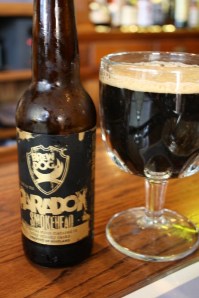
 

Brew Dog Brewery's Paradox Smokehead

Brew Dog Brewery's Paradox Smokehead

Photo Courtesy of Kitchen Treats

This was listed under their ‘smoked’ beers section of the beer list.  However, as I was discussing my next selection with my dinner companion, the knowledgeable staff was quick to point out that this was not a rauchbier.  The malt had not been smoked with beechwood.  The smoky characteristics were a result of the length of time the stout sat in Smokehouse’s islay whiskey barrels.

It is understandable that many a person take pause at their first sip of a rauchbier.  Even when one knows what they are getting into, the smokiness of the beer can give a person pause.  However, I am not such a person; I welcome the smoke with open arms.  However, for the first time in a very, very long time I took my first sip of beer, tasted, paused and an expletive came flying out of my mouth.  This Paradox was like no other beer I had tasted.  I wasn’t sure that when I looked down at my hand if the glass I was holding was going to contain beer or morph into a rocks glass filled with Lagavulin.  To give some understanding to my depth of shock you must understand that I am the product of staunch New England Yankee etiquette.  There are certain things that must never do:  You don’t place your elbows on the table, you never confuse your dessert spoon with your coffee spoon, and you never use a cell phone while at dinner.  This beer made me break that final rule.  Upon the initial tasting, I texted a friend who is a scotch connoisseur and a friend who is a beer connoisseur because I wanted them to find this beer post haste.

I have to tip my hat to the brewers at Brew Dog.  The entire experience is a purposeful deception.  The nose is not quite a traditional rauchbier.  The differences are subtle, but noticeable if you’re looking for them.  It’s just a tiny bit sweeter.  The smoke you are expecting is really the peatiness from the beer’s time in the barrels.  At 10% ABV the beer unsurprisingly had a bit of an alcohol note that only enhanced the the experience of combining beer and scotch.   It’s a geeky beer and it isn’t for everyone, but if you’re reading these words, this is a beer for you.

As dinner was winding down, I wasn’t sure how to finish my meal.  Fortunately, our knowledgeable barkeep, Jamie (with whom we discussed wine, rye, the cocktail revolution, and of course beer), suggested the Maredsous Abbaye-Abdij and I am glad he did.  I tend to lean towards imperial stouts as an after dinner beer, however if you have a predilection for abbey style beers, then this is a great choice.  The nose is floral as one would expect.  The beet sugars lend to the high alcohol content (10% ABV) and unlike the Paradox this one comes upon you like a thief in the night.  There is no bite at all from the alcohol and is surprisingly mild with slight notes of citrus with just a modicum of lime and has a very classic Belgium style  finish.

I left completely satiated.  My quest for fine beer and good conversation was completed in earnest at Jack’s Bistro.

Saúde!

The Goose, The Mule, and Sidney Frank

•March 30, 2010 • 5 Comments

I love brown liquors.  They are generally robust, complex, and most importantly, delicious.  This is part of my disdain for vodka.  Vodka is bland and tastes like nothing, as it should.  However, it isn’t the spirit that garners my hatred so much as it is with the pretentious vodka drinkers who tell me about the subtle refinement of Grey Goose as they dump it into an orange juice filled glass.  Idiots.

Sidney Frank, the father of Grey Goose, was a marketing genius.  I mean this is the guy who made Jägermeister popular.  What was his secret? Americans are not very smart.  Well, that and Americans strive for luxury whether it is real or perceived.  In the mid 1990s the dot-coms were flourishing and people were drunk with money.  Absolut was the brand of choice and considered the premium vodka available.  It was priced under $20.  What does Mr. Frank do?  He creates a great back story to go along with the vodka he hasn’t even made yet, strikes a deal with some cognac distilleries that had fallen on hard times, and invents the $30 bottle of vodka, which is almost twice as expensive as the next closest competitor.  The perception of the quality came from the outrageous price.  Mr. Frank was absolutely brilliant.

There have been numerous marketing studies that reveal ones perception has almost everything to do with how people judge their vodka.  Remember that Vodka is a grain neutral spirit and by definition is a flavorless and odorless spirit.  At a fundamental level there is no difference between vodkas.  The only real difference is the removal of the impurities and if you really wanted to (although I don’t recommend it), you could use a Brita filter to accomplish the same thing.  With all of this said, is there a difference between vodkas? Yes.  But, do you need to pay $40 a bottle for it?  No.

So, why the rant and thoughts on vodka?  I was out celebrating my anniversary at Woodberry Kitchen for brunch with my wonderful wife, Red, and she said, “Oh, I know what you should have: a Gov’t Mule (not to be confused with the band)”.  My taste buds recoiled and my face knotted up like I had seen Bea Arthur naked.  It’s just noon and she wants my first drink of the day to be vodka based?  And here I thought she loved me.

“Why?” I respond.  “Because it sounds good.” Like any good husband, I acquiesced and ordered the Gov’t Mule along with my brunch not hoping for much.  As it was placed in front of me my outlook brightened a bit.  It was served in a copper mug that was brilliantly cold, which assuaged some of my apprehension of the smaller ice cubes I noticed in my drink.  Large well formed ice cubes are essential to good drinking, but that is a discussion for another day.

The Gov't Mule

Photo Courtesy of Michelle Howell at Kitchen Treats

The Gov’t Mule is made with Prairie organic vodka, house-made ginger beer, lime-ginger simple syrup and garnished with lime shavings.  I was impressed by the nose.  My immediate first impression was the clean citrus and floral notes that smelled like spring fading into early summer.  I was worried that with the infusion of the simple syrup the drink would lean towards that cloy aftertaste indicative of so many vodka based drinks.  I was pleasantly surprised to be wrong.  It was light and crisp with just a hint of sweet throughout and just a modicum of  heat from the ginger beer to balance it out.  It was the perfect compliment to cut through my heavily smoked andouille sausage (which was positively divine).  The Gov’t Mule was perfectly created.  There was no bite at all from the vodka, instead it did what so few vodkas do.  It incorporated the components of the drink and made them its own and the drink left a clean mouth feel.

I cannot believe I am writing this, but I highly enjoyed this vodka based drink and would submit it for recommendation for other discriminating palates.  It appears that my distrust for vodka drinks had been misplaced…at least for this one occasion.

Saúde!

What do we have here?

•March 29, 2010 • Leave a Comment

I drink.  You drink.  We all drink.  I just drink better than you.  Don’t take that as a personal affront.  It’s just the truth.  Yes, you can throw down $26,000 for a bottle of  a Montrachet 1978 from Domaine de la Romanée-Conti or buy Louis XIII Pearl for a mere $28,000 (if you’re lucky), but few have the intestinal fortitude to do so.  It’s okay.  I’m here to help.  I will consume it all: near, far, and wide in order to sacrifice my liver — and occasionally my palate — so that you will find exactly what you need, how to make it, and where to get it when your dipsomania strikes.

It’s finally time that there be a place of intelligence, wit, and perhaps a bit of hubris where kindred spirits can come to talk about the subtle complexities of elderflower liquor and realize that the best limoncello in the United States is homemade at my favorite watering hole in New Jersey.  We’ll examine why Rye is making a resurgence and why expensive vodka is (almost) always a waste of money.  Most importantly, I will seek out and discover hidden treasures: the vineyards, bar chefs and brewers who have the chops to make the best wines, cocktails, and beers available in North America.

So, sit back, enjoy, and for the love of all that is good, have a drink.

Saúde!